Strategic Sales

Strategic Sales turns market potential into measurable business. Successful expansion requires more than an outstanding product.
Key Account Management
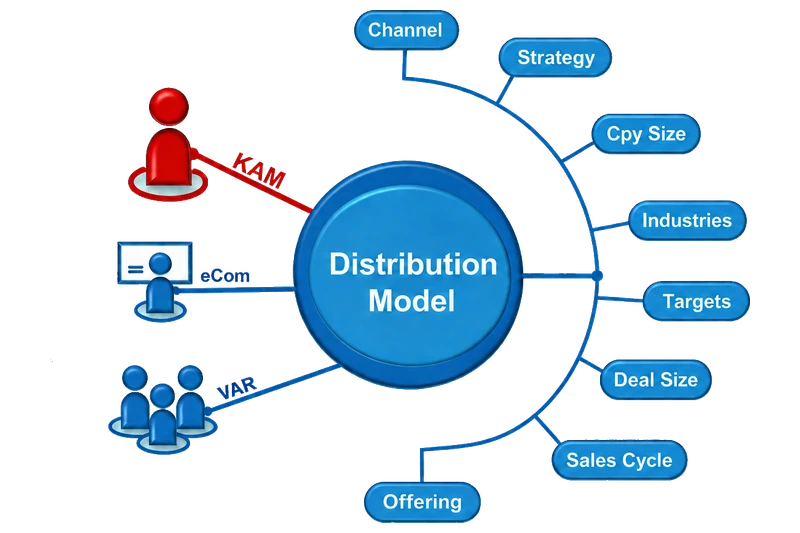
Strategic Key Account Management for Sustainable Growth
Turn your most important enterprise customers into long-term revenue engines.
In key markets such as DACH and across EMEA, APILANi’s senior Strategic and Key Account Managers build, manage, and grow high-value enterprise accounts with structure and focus. We don’t chase volume - we develop strategic customers that drive predictable growth. We take ownership of your key accounts, strengthen decision-maker relationships, and translate real customer needs into measurable revenue, stronger deals, and long-term market momentum.
What you gain:
✔️ predictable pipeline and revenue growth
✔️ strong C-level relationships
✔️ clear account strategies
✔️ market-driven product development
✔️ strategic enterprise accounts and international growth
Partner Management

Partner Management becomes important when your products get more robust and standardized.
As part of your global Go-to-Market strategy, APILANi helps you generate business through sales channels such as VARs, ISVs, SIs and affiliate partners. We bring your business partners up to speed, enabling them to distribute and position your product line across EMEA more quickly.
A better understanding of your customers’ purchasing preferences and your channel partners’ strengths accelerates the sales cycle. To gain market share in Europe, we help you manage your existing channel and strategic partners, including OEMs, VADs, VARs and service providers,efficiently and with greater impact. Marketing campaigns and customer events are also part of our well-developed business plan. As part of your Go-to-Market concept, we support you in building and expanding your ISV and SI network.
What you gain:
Access to focused sales and business consulting partners, experienced value-added channel partners and a broad network of system integrators.
Solution Selling vs. Product Selling
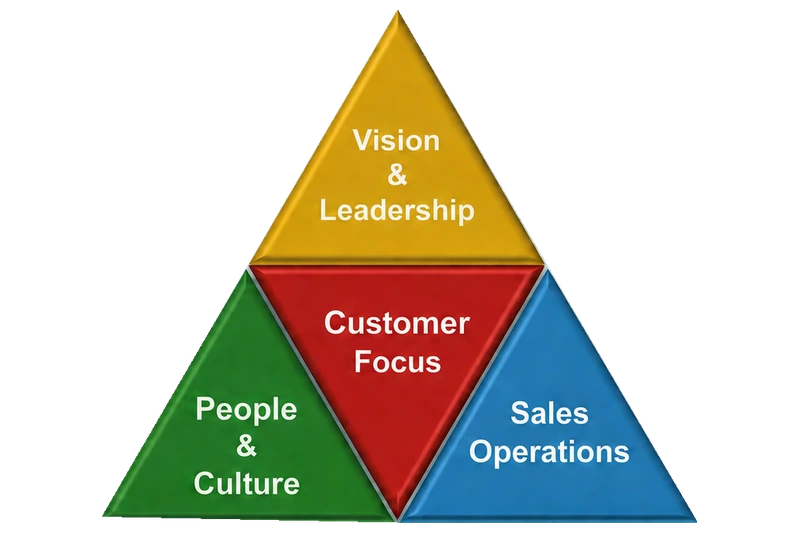
Enterprise growth starts with knowing exactly where and how to win.
APILANi helps you focus on the customers and opportunities that truly matter. We support you in addressing high-potential accounts with the right strategic topics - such as infrastructure modernization, digital transformation and platform strategy - so your sales efforts are aligned with real business priorities, not just activity.
By structuring your target markets and segments, you gain the ability to set clear priorities and allocate the right resources where they create the highest impact. This enables you to deploy focused, account-driven sales approaches instead of spreading effort across low-impact opportunities - and to systematically increase win rates, deal quality and sales efficiency.
Solution Selling, combined with consulting-driven value creation, is a critical success factor for building a scalable and high-performance sales organization. It shifts sales from product pitching to business impact, from reactive selling to strategic engagement - and turns your sales team into a trusted advisor for your customers and a predictable growth engine for your business.
You gain stronger customer relationships, higher win rates and predictable growth.
Win-Win with Your Customer
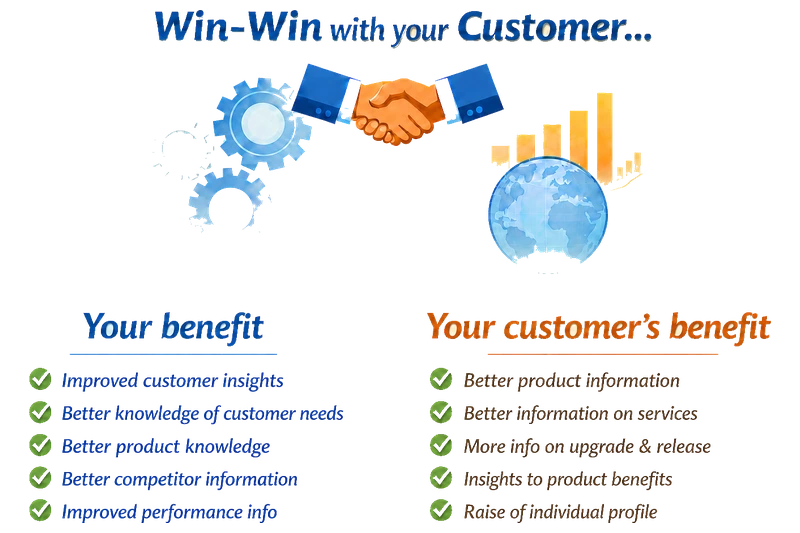
With a clear, data-driven approach, you create real value for both sides.
Your benefit
You gain deeper customer insights, a better understanding of customer needs and usage, and stronger product and competitive knowledge. This creates greater transparency, supports better decisions and enables more focused action.
Your customers’ benefit
Your customers receive clear product and service information, early insights into upgrades and releases, and a better understanding of product value. Targeted support helps them strengthen their position and actively contribute to future product development.
The result
Stronger partnerships, better decisions and sustainable business success - for both sides.
APILANi supports your direct and indirect sales, complements your sales coverage and connects you with experienced IT consulting experts - helping you build and grow long-term relationships with enterprise customers.
Sales Operations & Customer Value Management

Professional Sales Operations turn data into strategic control and sustainable growth.
With the right setup, you
➜ anticipate demand and market shifts
➜ make decisions based on reliable data
➜ scale sales with focus and control
This transforms sales from an operational function into a strategic leadership instrument.
APILANi provides tailored back-office services to build a structured, scalable, and Europe-wide sales organization – with clear objectives, responsibilities, planning and reporting.
What you gain:
✔ Full control over priorities and resources
✔ Predictable, profitable growth in your target markets
Move from CRM to CVM - gain Market Share and long-term Customer Relationships

Customer-vendor relationships are complex.
Multiple stakeholders influence every buying decision:
➜ Some actively drive your solution forward.
➜ Some block it.
➜ Some barely know your company – yet have already formed an opinion.
➜ Others pursue interests that are never openly discussed in official meetings.
If you do not know who wants what – and why, you are not managing your sales process. You are guessing.
A modern, up-to-date CRM is therefore not a nice-to-have. It makes the difference between random activity and predictable revenue.
CRM is more than a sales tool
CRM is not simply an address or contact database. It is the central nervous system of your customer relationships.
Its true value does not lie in names, revenue figures or contact details. It lies in understanding the relationships with your customers, competitors, markets and the wider ecosystem.
This information is not only relevant to Sales. It creates value for Marketing, Service, Finance, Product and Development teams.
One platform. One source of truth.
➜ Marketing campaigns and leads originate in the CRM.
➜ Sales qualifies leads and develops them into opportunities.
➜ Meetings, presentations, proposals, contracts, invoices and payments are linked to the relevant deal.
➜ Support, consulting, training, upselling and cross-selling flow back into the same system.
This creates a complete view of every customer relationship across the entire lifecycle.
Customer Relationship Management becomes Customer Value Management – creating a measurable and sustainable competitive advantage.
But technology alone is not enough. Success requires clear roles, reliable responsibilities and genuine collaboration. Every team takes ownership of the work it is responsible for. Customers recognize and value this professionalism.
Complex challenges rarely have a single person or department to blame. Sales, Support or “the others” are not the problem. A shared team approach is the solution.
A CRM connects data. Collaboration turns it into real customer value.
Orchestration of responsibilities within the Sales Cycle

Responsible for:
👉 Marketing Campaigns
👉 Lead Generation
👉 Opportunity Creation
👉 Handover to Sales

Responsible for:
👉 Work on Opportunity
👉 Sales Negotiation
👉 Work on Purchase
👉 Customer Care

Responsible for:
👉 Product Delivery
👉 Accounting / Invoicing
👉 Operational Care
👉 Handover to Sales
Automated sales. Real competitive advantage. Turn Customer Value Management into action.
01 - Understand customers and their goals
➜ Identify challenges, expectations and business objectives
➜ Analyze existing solutions and opportunities for improvement
➜ Jointly define the outcomes that represent success
02 - Agree on a shared Success Plan
➜ Set specific goals and measurable success criteria
➜ Clarify responsibilities on both sides
➜ Agree on milestones and regular progress reviews
03 - Support implementation and adoption
➜ Support implementation and integration into existing workflows
➜ Train users and equip internal champions
➜ Identify and remove barriers to adoption
04 - Measure and demonstrate Customer Value
➜ Compare results with the starting point and agreed goals
➜ Demonstrate improvements in time, cost, quality or productivity
➜ Assess the value achieved together with the customer
05 - Use feedback and address gaps in value
➜ Gather feedback from users and responsible stakeholders
➜ Identify low adoption, unresolved problems and dissatisfaction
➜ Implement improvements and verify their impact
06 - Develop customer relationships strategically
➜ Discuss future requirements and new goals together
➜ Identify relevant extensions based on actual needs
➜ Expand collaboration based on demonstrated customer value
A CRM collects information. Customer Value Management turns it into measurable customer value and lasting relationships. Start now!
Sales Transformation

Take Control of Complex Sales Cycles:
Changing customer organizations, evolving markets and shifting strategies on the customer side can have a massive impact on your go-to-market strategy - and, if left unmanaged, can quickly undermine even the strongest business initiatives.
In complex product and solution sales, you should be prepared for sales cycles of up to 12 months or more. These long cycles are not linear - they move through distinct phases, each requiring a different strategic focus, a different level of leadership involvement, tailored sales engagement and the right tool support at the right time.
That’s why successful Go-to-Market execution is not about pushing harder - it’s about steering smarter. By structuring the sales cycle into five clear phases, you gain control over priorities, improve decision-making, align stakeholders and systematically increase your chances of closing complex, high-value deals.
Better Strategy. Stronger Teams. Smarter Sales.
01 - Analyze market changes and sales transformation needs
➜ Assess market trends, competition and changing buying behavior
➜ Identify weaknesses and bottlenecks in the current sales organization
➜ Determine what needs to change and how urgently
02 - Refocus sales strategy and market approach
➜ Refine target markets, customer segments and ideal customer profiles
➜ Adapt positioning, value propositions and sales channels
➜ Set clear sales objectives and resource priorities
03 - Design the sales model, roles and responsibilities
➜ Align direct sales, partner sales and account coverage
➜ Clarify roles, responsibilities and decision-making authority
➜ Organize collaboration between marketing, sales and specialist teams
04 - Improve sales processes and tools
➜ Define sales stages with clear progression criteria
➜ Align CRM, pipeline management and forecasting with sales workflows
➜ Automate routine tasks and simplify internal handovers
05 - Strengthen sales capabilities and support change
➜ Develop consultative selling, negotiation and solution-selling skills
➜ Embed new ways of working through training and coaching
➜ Involve sales leaders and support day-to-day implementation
06 - Measure sales performance and scale successful approaches
➜ Review win rates, sales cycle length and productivity
➜ Test new approaches and scale successful initiatives
➜ Adjust strategy, processes and resource allocation based on results
You want to optimally adapt to changing market conditions? Start your journey to strategic Sales Transformation.
User Experience Management & Customer-Satisfaction

The sale is not complete when the contract is signed – it is complete when your customer experiences real value.
Long-term customer loyalty is not built through promises or a signed contract, but through the consistent, measurable value your customers experience throughout the relationship.
The after-sales phase determines whether customers:
✔ recommend your solution
✔ purchase additional services
✔ renew and expand their business
✔ become long-term strategic partners – or leave
Actively involve your customers throughout onboarding, adoption and ongoing development. Regular exchange, measurable results and targeted support strengthen trust and uncover new opportunities.
The result: stronger customer loyalty, higher customer lifetime value and sustainable revenue growth.
Customer Experience that builds Trust and Loyalty
01 - Understand the entire Customer Experience
➜ Explore the journey from first contact to ongoing collaboration
➜ Identify expectations, positive experiences and frustrations at every touchpoint
➜ Consider the perspectives of prospects, buyers and users
02 - Create a consistent Experience across the Company
➜ Make contact, consultation, purchasing and service straightforward
➜ Reduce unnecessary barriers, waiting times and repeated requests for information
➜ Ensure consistency across all departments and touchpoints
03 - Make Support easy to access
➜ Make contacts and communication channels easy to find
➜ Connect customers with the right support without unnecessary detours
➜ Pass on the context of each request so customers do not have to repeat themselves
04 - Involve Customers in Improvements
➜ Gather suggestions on communication, services and collaboration
➜ Test new offerings and service interactions together with customers
➜ Show which improvements result from their contributions
05 - Encourage Exchange and a sense of Belonging
➜ Create opportunities for customer dialogue, events and peer exchange
➜ Share knowledge, practical insights and experiences from the customer network
➜ Value participation and connect customers with one another
06 - Build Trust through reliable Communication
➜ Clearly communicate commitments, next steps and timelines
➜ Explain changes or problems early and transparently
➜ Keep customers informed until their issues are resolved
Turn customer experience into lasting customer loyalty and active engagement.