Coaching & Mentoring

Clarity drives better decisions.
Corporate Culture & Value Management
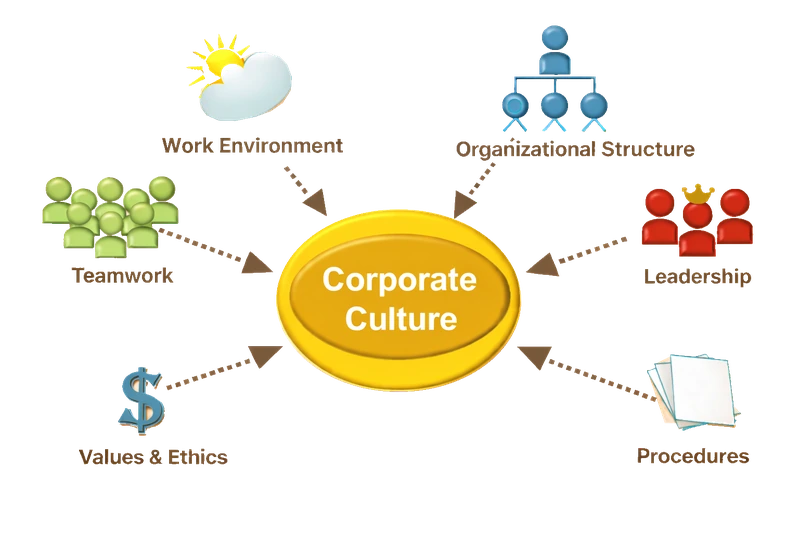
Leadership means translating complex information into clear instructions for action. More and more leaders must navigate a highly dynamic environment, derive the right strategy from a flood of information, and communicate it clearly and effectively to their organization. But how can this be achieved?
Corporate Culture & Employer Branding:
Over the years, many companies have established rigid structures and mindsets that make it difficult or even impossible to adapt to changing conditions:
➜ increasing competition
➜ rising cost pressure
➜ shortened delivery and expectation cycles
A cultural transformation is required to remain competitive in the long term. However, this transformation is for many organizations hardly achievable on their own.
⇒ With APILANi, you actively shape cultural transformation.
Your company becomes:
🔹 competitive and clearly differentiated
🔹 adaptable in a dynamic market environment
🔹 attractive to new talent and skilled professionals
You break away from rigid patterns and develop the ability to act flexibly, resiliently, and future-oriented - now and in the future.
Leadership, Values, Change:
Leadership means translating complex information into clear, actionable decisions. More and more leaders operate in a highly dynamic environment, must derive the right strategic evaluation from an ever-growing flow of information, and communicate it clearly and effectively throughout the organization. But how can this be achieved sustainably?
A new perspective on organizations and transformation:
Based on so-called Value Memes (Werte-Meme) - which shape lifestyles, thinking patterns, and beliefs - we apply the method Spiral Dynamics.
This enables:
➜ structured analysis of organizations, individuals, and markets
➜ clear understanding and classification of development stages
➜ targeted and effective transformation
This creates an entirely new approach to:
🔹 sustainability
🔹 diversity management
🔹 modern leadership
⇒ With APILANi, you unlock new perspectives on leadership and transformation.
You gain:
🔹 clarity on cultural and organizational dynamics
🔹 solid decision-making foundations for transformation processes
🔹 the ability to actively steer sustainable development
Build the Culture, Leadership and Team Your Growth Needs
1. Culture becomes a strategic asset
A growing team needs more than tasks and objectives - it needs a shared understanding of how you work together.
A unique culture is emerging:
❓ How do you make decisions?
❓ How do you handle disagreements?
❓ How do you give feedback?
❓ What behaviors are rewarded or tolerated?
A healthy culture reduces complexity, aligns expectations, and keeps your team focused even under pressure. Investors value culture enormously because culture determines whether a team can scale.
2. Leadership must evolve with the company
What works in a small, technical founding team won’t work as you hire new talents, expand into new markets, or add customer-facing roles.
As your organization grows, you must shift from …
⇆ doing to enabling
⇆ controlling to empowering
⇆ improvising to planning
⇆ reacting to anticipating
Strong leadership creates an environment where diverse teams thrive and individuals take ownership.
3. The right people at the right time
Every growth phase requires different skills:
➜ In early stages: product builders, problem solvers, generalists
➜ In scaling stages: operators, process experts, specialists
➜ In mature stages: leaders, strategists, commercial talents
APILANi helps you identify which roles you need now, and which roles you will need next, ensuring your organization grows in a planned, controlled way.
4. Team development is business development
Ultimately, your company will only grow as far as your team can carry it.
With the right mix of people -aligned, empowered, and purpose-driven - you create an organization that:
➜ innovates faster
➜ adapts more flexibly
➜ performs more reliably
➜ attracts stronger talent
A strong team doesn’t just execute your strategy - it becomes your strategy.
Situation Analysis
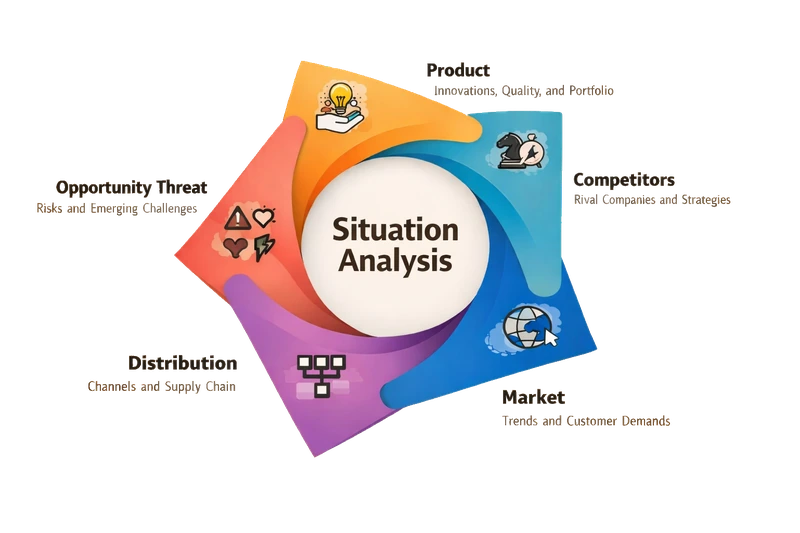
Strategic Implications- key insights that directly support decision-making:
📌 critical success factors (e.g., digital readiness, talent, security)
📌 urgent risks or gaps requiring attention
📌 investment priorities (where to allocate resources)
📌 change enablers (culture, leadership, tools)
We provide you with a clear, data-driven view of your current situation as a solid foundation for strategic and IT-related decisions.
Together, we analyze your status quo and develop a practical roadmap for a sustainable overall solution. You can structure, prioritize, and validate your actions and focus exactly where the greatest impact lies—from the most critical issues down to the details.
With our systemic approach, you gain transparency into dependencies, reduce complexity, and uncover new courses of action that were previously not visible or within reach.
Situation Analysis – From Understanding to Action
A clear strategy starts with understanding where you stand – internally and externally. The Situation Analysis helps you challenge assumptions, understand influences and dependencies, validate your objectives and turn insights into clear priorities and actions.
01 - Is the Market Ready?
Understand market dynamics, trends and timing.
➜ Is there a market already – or are we too early?
➜ Which trends are shaping demand?
➜ Is now the right time to enter or grow?
02 - Is Our Product Ready?
Validate product-market fit and market requirements.
➜ Is our product right for the market?
➜ Does it solve a relevant customer problem?
➜ Should we add specific capabilities first?
03 - Are We Ready?
Assess your team, capabilities and resources.
➜ What makes us the right team?
➜ Are we doing what we can do best?
➜ Do our capabilities complement each other?
04 - Where Can We Win?
Understand customers, competition and differentiation.
➜ What do customers really value?
➜ What makes us different from the alternatives?
➜ Where do we have the strongest opportunity?
05 - What Matters Most?
Evaluate impact, dependencies and priorities.
➜ Which topics have the greatest impact?
➜ What depends on what?
➜ What needs to happen first?
06 - What Do We Do Next?
Turn insights and priorities into action.
➜ Which actions are required?
➜ In what sequence should we address them?
➜ How can we grow best?
Target Management

After the Situation Analysis, you gain clarity about where you really stand and what truly matters for your business. You can structure your topics with confidence, understand the key influences and interactions, and validate your objectives based on facts instead of assumptions.
Rather than relying on gut feeling or fragmented information, you get a holistic view of your current situation. This makes it easy to identify what is strategically relevant, where risks are emerging, and which opportunities are worth pursuing. You immediately see which initiatives create real impact—and which ones only consume time and resources.
With this foundation, you can prioritize effectively and align your teams around a shared understanding of goals and challenges. Decisions become faster, more focused, and more reliable, because they are grounded in a structured and transparent analysis.
The result is a clear actionable roadmap: you don’t just understand the situation—you know exactly which actions to take and why. This enables you to move from analysis to execution without delay and to act immediately with confidence and purpose.
Turn Clear Goals into Focused Action
1. Clarify & Prioritize Goals
➜ apply SMART criteria: specific, measurable, achievable, relevant and time-bound
➜ prioritize by strategic relevance, impact and effort
➜ resolve conflicting goals and agree on success criteria
2. Align Stakeholders & Assign Ownership
➜ build a shared understanding of goals across teams
➜ clarify expectations, responsibilities and decision-making authority
➜ assign an accountable owner to each goal
3. Define KPIs & Establish Baselines
➜ select leading indicators for progress and lagging indicators for results
➜ establish baseline values, target values and measurement timelines
➜ define data sources, tools and measurement responsibilities
4. Assess Dependencies, Risks & Resources
➜ identify dependencies between goals, teams and initiatives
➜ assess risks, constraints and available resources
➜ agree on mitigation measures and realistic alternatives
5. Build an Actionable Roadmap
➜ translate goals into concrete actions and milestones
➜ sequence quick wins and strategic initiatives by priority and dependency
➜ assign ownership, resources, budgets and deadlines
6. Review Progress & Adapt
➜ make progress visible through regular reviews and clear reporting
➜ address deviations through agreed decision-making and escalation paths
➜ adjust goals and actions as conditions change, and apply lessons learned
Team Building & Collaboration

As your company grows, the challenges of team composition become more complex. Diversity in expertise, background and perspectives can significantly strengthen your business - but it also requires intentional leadership.
Managing complexity through clarity and structure:
Heterogeneous teams bring innovation, creativity and new ways of thinking.
However, they also introduce:
➜ different working styles
➜ varying communication preferences
➜ conflicting priorities
➜ contrasting expectations
To harness these strengths, you need clear processes, defined roles and strong internal communication.
Without structure, diversity becomes friction. With structure, diversity becomes a competitive advantage.
As Enterprise Customer you are facing enormous pressure through internal restructuring processes, outsourcing, merge & acquisitions, project & deadline pressure and team changes. Get out of inactivity and take control of your situation.
⇒ APILANi is your Alliance Partner for new action alternatives.

Employees want to be guided and not managed.
“Few managers realize that ultimately they can and must only lead one person. That person is you.” (Peter Drucker)
Which leadership and organizational models are out there? And which one fits to our company?
⇒ Together with APILANi you will analyse your current situation / your internal processes / your company structure from an energetic perspective and create a guideline for a satisfying overall solution.
Unterschiedliche Führungsstile
Verschiedene Führungsstile bestimmen, wie Entscheidungen getroffen, Teams gesteuert und Ergebnisse erreicht werden – von autoritär bis partizipativ.
Naturgesetze der Führung
Erfolgreiche Führung folgt grundlegenden Prinzipien wie Vertrauen, Klarheit und Verantwortung, die unabhängig von Branche oder Organisation wirken.
Agile Führung
Agile Führung bedeutet, Teams flexibel zu steuern, schnelle Entscheidungen zu ermöglichen und kontinuierliche Anpassung in dynamischen Märkten sicherzustellen.
Chef oder Führungskraft? Die Unterschiede
Ein Chef verwaltet Aufgaben – eine Führungskraft inspiriert, entwickelt Menschen und gibt strategische Richtung vor.
Was einen guten Chef ausmacht
Ein guter Chef kombiniert Fachkompetenz mit Entscheidungsstärke, Verlässlichkeit und der Fähigkeit, Orientierung zu geben.
Wie Du zu einer besseren Führungskraft wirst
Durch Selbstreflexion, kontinuierliches Lernen und die Fähigkeit, Feedback anzunehmen und umzusetzen, entwickelt sich wirksame Führung.
Der Schlüssel zur guten Führung
Der Schlüssel liegt in klarer Kommunikation, konsequentem Handeln und der Fähigkeit, Vertrauen im Team aufzubauen.
Führungskraft als Coach
Moderne Führungskräfte agieren als Coaches, die Potenziale erkennen, fördern und Mitarbeiter zur Eigenverantwortung befähigen.
Die häufigsten Führungsfehler
Typische Fehler sind fehlende Klarheit, inkonsistente Entscheidungen und mangelnde Kommunikation gegenüber dem Team.
Transformationale Führung
Transformationale Führung motiviert Mitarbeiter durch Vision, Sinn und Inspiration, über sich hinauszuwachsen und Veränderungen aktiv mitzugestalten.
Die ideale Führungskraft
Die ideale Führungskraft vereint strategisches Denken, Empathie und Umsetzungsstärke in einem ausgewogenen Führungsansatz.
Techniken zur Entscheidungsfindung bei agiler Führung
Agile Entscheidungsfindung nutzt iterative Prozesse, Datenfeedback und dezentrale Verantwortung für schnelle und fundierte Ergebnisse.
Was sich Mitarbeiter wirklich vom Chef wünschen
Mitarbeiter erwarten vor allem Klarheit, Wertschätzung, Entwicklungsmöglichkeiten und verlässliche Führung.
Gibt es ein Geheimnis für erfolgreiche Führung?
Es gibt kein Geheimnis – erfolgreiche Führung entsteht aus konsequenter Anwendung bewährter Prinzipien und situativer Anpassungsfähigkeit.
Team Power

The "who" behind the "what" is the hidden secret. Successful teams are the winner - erverywhen and everywhere.
Team Power Sessions cover topics like
➜ Teambuilding levels
➜ Five mistakes about teamwork
➜ The ten success factors
➜ The secret of the "12"
➜ Distribution of roles within the team
A team is like an orchestra
➜ Trust your team
➜ Remote teams
➜ Lack of team spirit
➜ How mobbing comes up
➜ From the demotivated team to the performance group
Strengthen your team and collaboration – get started with APILANi!
1. Common goals and values
➜ All team members understand and share the vision.
➜ Clear roles and responsibilities promote alignment.
2. Open communication
➜ Transparent information sharing (e.g., via Microsoft Teams, Slack or Confluence)
➜ Active listening and respectful exchange of diverse opinions
3. Trust and respect
➜ Every contribution counts regardless of position or experience.
➜ Mistakes are seen as a learning opportunity, not a question of blame.
4. Collaboration with Technology
➜ Shared documents (e.g., Google Workspace, SharePoint) vs. information silos
➜ PM Tools (e.g., Asana, Jira, Trello) create transparency about progress and tasks.
5. Culture of Continuous Improvement
➜ Regular retrospectives and feedback loops
➜ Promoting creativity and personal responsibility
6. Cultural and Interdisciplinary Diversity
➜ Different perspectives strengthen innovation and problem-solving.
➜ Intercultural sensitivity is crucial for international teams.
Work on your team now!